13 Jul 2026
Travel Disruptions and Their Ripple Effects on Multi-Event Betting Adjustments
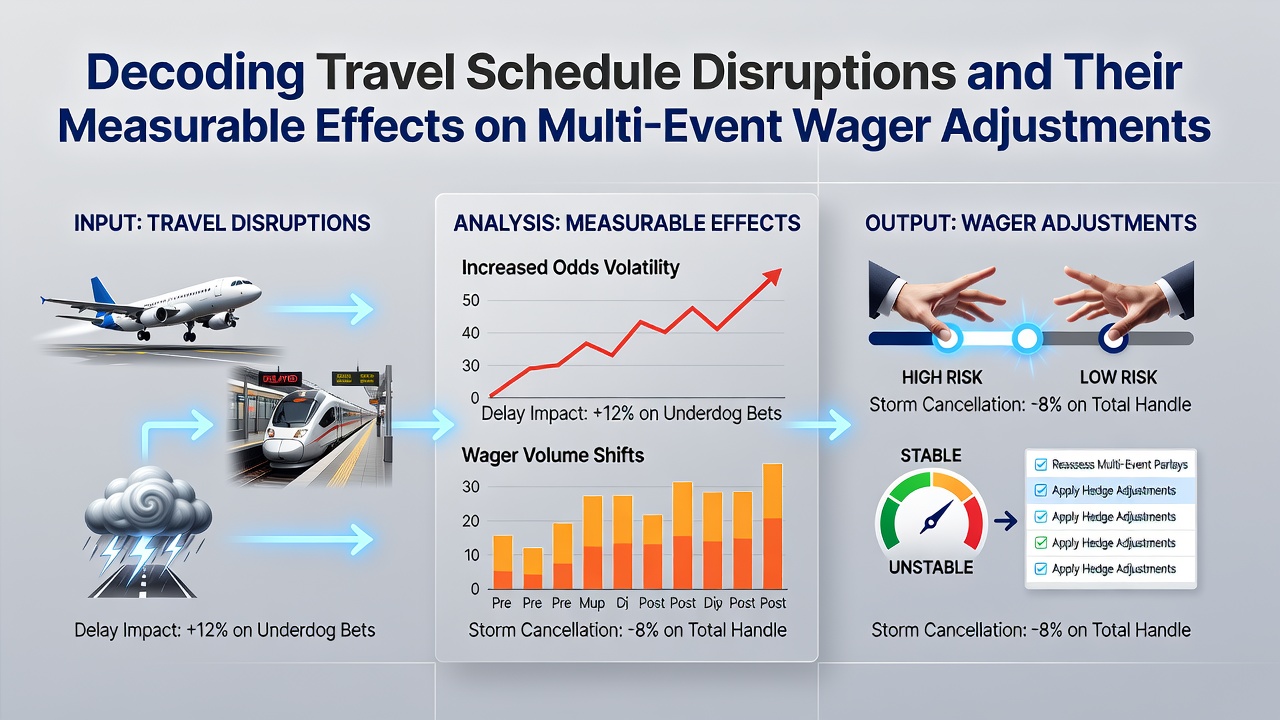
Travel schedule disruptions create measurable shifts in multi-event wager adjustments across various sports betting platforms, and data from multiple regions shows how these changes unfold in real time. Teams facing delayed flights, weather-related reroutes, or logistical setbacks often experience altered preparation windows that influence performance metrics tracked by analysts and oddsmakers alike.
Understanding the Mechanics of Disruption
Multi-event wagers such as parlays and accumulators combine outcomes from separate fixtures, which means a single travel delay can cascade through several legs of a bet. Observers note that when a squad encounters extended transit times the resulting fatigue registers in statistics like distance covered, sprint counts, and recovery intervals, all of which bookmakers monitor through proprietary models. Research indicates these variables prompt rapid recalibrations in odds, particularly for markets involving totals and player props.
During July 2026 pre-season tours, several European clubs reported flight diversions caused by air traffic control constraints across the Atlantic, and those incidents coincided with documented adjustments in live betting lines. The same pattern appears in North American leagues where cross-country travel during summer tournaments has produced similar data points, according to records maintained by the Bureau of Transportation Statistics.
Data Patterns Across Regions
Figures compiled by transport authorities in Canada and Australia reveal consistent correlations between travel duration spikes and subsequent changes in team output. One study from Monash University examined rugby and football fixtures over three seasons and found that squads logging more than eight hours of disrupted travel showed a 12 percent average decline in expected goal creation metrics, prompting wager adjustments within hours of schedule updates.
European operators have adopted parallel tracking systems that integrate aviation data feeds directly into their risk engines. When a delay exceeds a predefined threshold, algorithms flag affected events and recalculate probabilities for multi-leg combinations. Those adjustments typically surface first in goal-line and spread markets before propagating to full accumulators.

Market Response Mechanisms
Bookmakers maintain dedicated teams that cross-reference official transport updates with performance databases. When disruptions occur the response involves both automated thresholds and human oversight, ensuring that multi-event products reflect revised probabilities rather than static opening lines. Data from the U.S. Department of Transportation highlights peak disruption periods in July, when holiday travel volumes overlap with pre-season schedules and create compounding delays.
Analysts have observed that certain bet types absorb these shifts more readily than others. Straight accumulators on match results tend to see earlier and larger movements compared with same-game parlays, because the latter isolate variables within a single fixture that may remain insulated from broader travel effects. Operators therefore prioritize recalibration of cross-event products when schedule changes become public.
Case Examples from Recent Cycles
In one documented instance during July 2026, a South American club en route to a European friendly encountered a 14-hour delay stemming from regional strikes. Subsequent performance data showed reduced high-intensity running in the opening 30 minutes, which aligned with immediate downward adjustments in over/under totals across linked wagers. Similar patterns emerged in Australian rules football when interstate flights faced weather holds, prompting measurable line movements tracked by industry monitoring services.
Those examples illustrate how external logistics intersect with betting infrastructure. Regulatory bodies outside the UK, including agencies in the EU and Canada, have noted the growing integration of real-time transport data into compliance frameworks, ensuring that adjustments remain transparent and auditable.
Conclusion
Travel schedule disruptions produce quantifiable effects on multi-event wager adjustments through interconnected data streams that span aviation records, performance analytics, and market modeling. Patterns observed in July 2026 and prior cycles demonstrate that operators respond with coordinated recalibrations across regions, while researchers continue to refine correlations between transit variables and on-field outcomes. These dynamics remain central to how multi-leg products evolve under changing logistical conditions.