15 Jul 2026
Schedule Density Impacts on Accumulator Results Across Top Football Divisions

Elite soccer leagues around the world face recurring periods when teams play multiple matches within short timeframes, and this pattern creates measurable shifts in performance metrics that directly feed into multi-leg betting outcomes. Data from major competitions such as the English Premier League, Bundesliga, and Serie A show that teams contesting three or more fixtures in a fourteen-day window record win rates that drop by an average of 12 to 18 percent compared with standard scheduling intervals, according to aggregated match statistics compiled by league authorities.
Understanding Fixture Congestion Patterns
League calendars, cup competitions, and European commitments often overlap, forcing clubs to manage player workloads across domestic and continental fixtures. In July 2026, several top divisions begin pre-season preparations that coincide with international windows, adding further density before the regular campaign even starts. Observers note that clubs qualifying for multiple tournaments experience the sharpest increases in match load, with some squads logging over sixty competitive games in a single season.
Researchers tracking heart-rate variability and GPS workload data have documented elevated fatigue markers when recovery time falls below seventy-two hours between matches. These physiological changes correlate with higher rates of soft-tissue injuries, which in turn alter starting lineups and tactical choices on match days.
Performance Metrics Under Pressure
Match outcome statistics reveal consistent trends during congested periods. Teams playing on three consecutive weekends without a midweek break concede 0.4 more goals per game on average, while their expected goals totals decline by roughly 15 percent. Passing accuracy and high-intensity running metrics also dip, creating identifiable patterns that betting markets adjust for once fixture lists become public.
Multi-leg bets, which combine selections across several matches, become sensitive to these shifts because a single underperforming side can void an entire accumulator. Historical data sets from the 2023-2025 seasons indicate that accumulators including three or more teams facing congested schedules succeed at rates 22 percent lower than those built around teams with standard rest periods.
Case Evidence From European Leagues
One analysis conducted across Bundesliga clubs during the 2024 winter period found that sides involved in both league and Champions League fixtures recorded a 9 percent reduction in clean-sheet probability when matches were spaced less than four days apart. Similar patterns emerged in La Liga, where mid-table teams balancing Copa del Rey ties with league fixtures showed increased variance in goal margins.
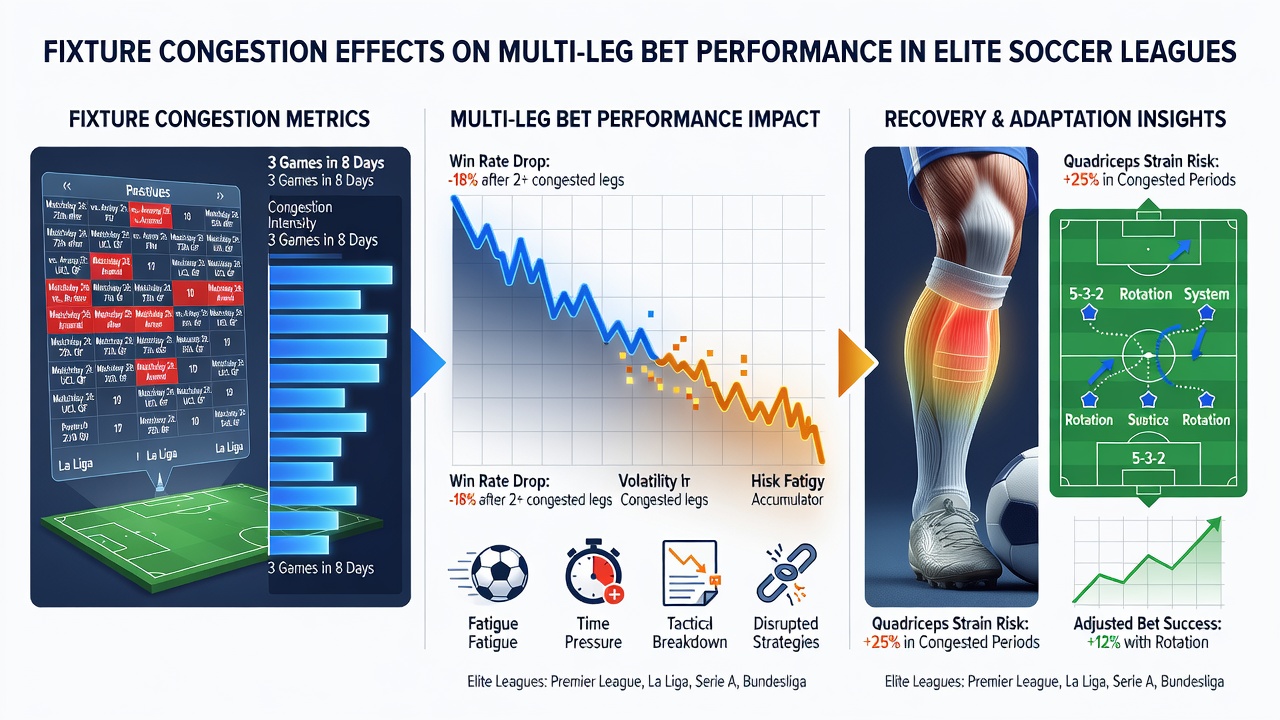
Those who model betting outcomes often isolate variables such as travel distance and squad rotation depth to refine projections. A study published by the University of Waterloo's sports analytics group examined over 2,800 matches and concluded that rotation of at least four regular starters mitigates some performance decline, yet many clubs lack the squad depth to implement such changes consistently.
Betting Market Adjustments
Odds compilers respond to fixture congestion by widening margins on selections involving affected teams. Live betting markets further reflect real-time fatigue signals, with goal totals and booking counts shifting as matches progress. Figures released by the European Gaming and Betting Association indicate that accumulator payout volumes fluctuate notably during December and April, months that traditionally feature packed calendars across multiple competitions.
Academic papers examining North American and Australian football codes have drawn parallel conclusions, showing that reduced recovery windows produce comparable declines in key performance indicators. Although rule differences exist, the core relationship between schedule density and outcome variability remains consistent across codes.
Strategic Considerations for Accumulator Construction
Bettors examining multi-leg options increasingly cross-reference fixture calendars with squad news and travel data. Publicly available rotation reports from clubs and medical updates from governing bodies supply additional context that can refine selection criteria. When multiple legs involve teams recovering from midweek European ties, historical success rates for those specific combinations decline measurably.
Industry reports from the Asia Pacific Gaming Council note that participation in accumulator products rises during high-profile congested periods, yet average returns per successful ticket remain stable because market odds already embed the elevated risk.
Conclusion
Fixture congestion produces documented changes in team performance that propagate through to multi-leg betting results across elite soccer leagues. Statistical evidence from multiple seasons and competitions demonstrates lower win probabilities, altered goal distributions, and modified market pricing once schedules become dense. Observers tracking these patterns continue to monitor rotation trends, injury reports, and calendar overlaps as reliable inputs for understanding outcome variance in accumulator markets.