Profit Without Peril: Decoding Matched Betting's Risk-Free Mechanics
7 Apr 2026
Profit Without Peril: Decoding Matched Betting's Risk-Free Mechanics
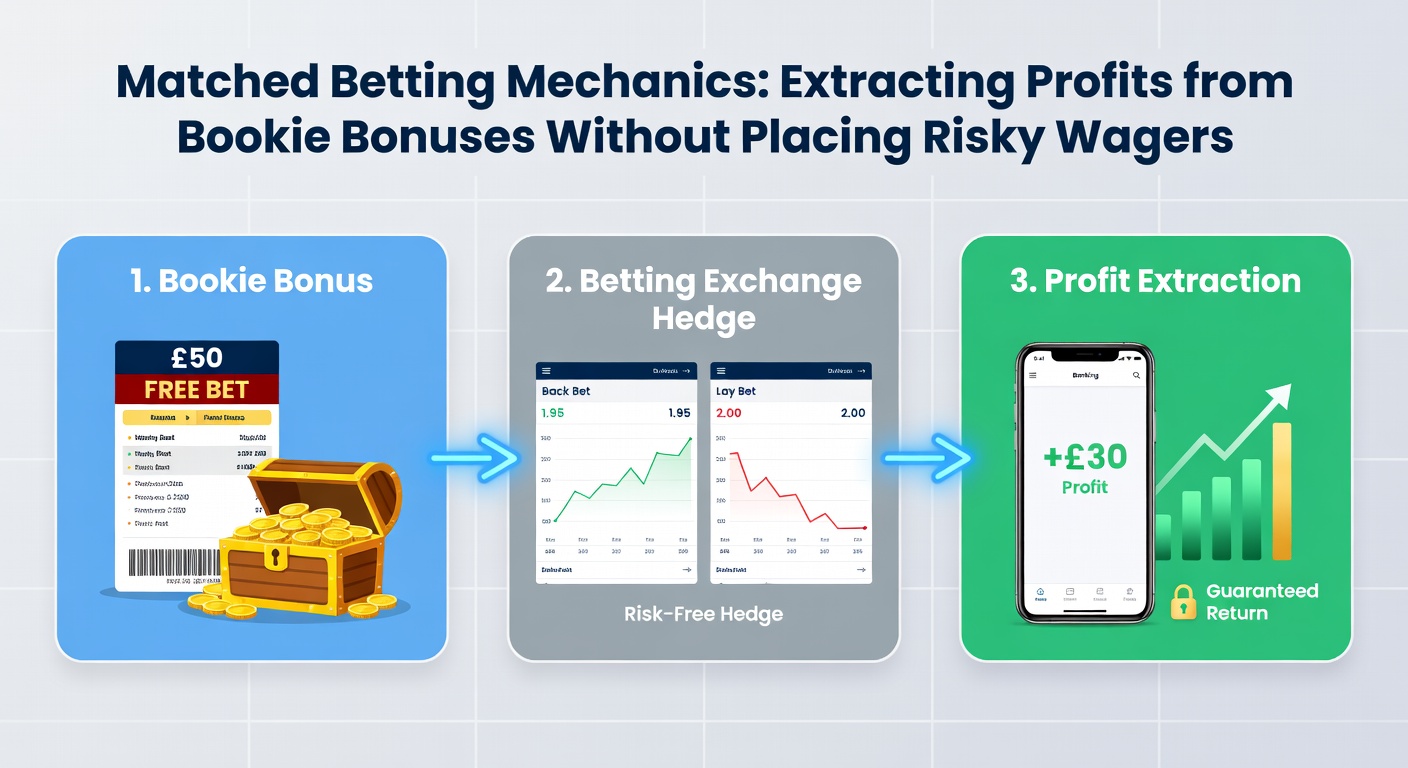
Matched betting has emerged as a strategy where participants extract guaranteed profits from bookmaker promotions without exposing themselves to the usual risks of gambling, and those who've mastered it often turn free bet offers into cash through precise back-and-lay bet pairings; data from industry trackers reveals that dedicated users can generate consistent returns, sometimes pulling in thousands annually by systematically qualifying for and converting bonuses.
Understanding the Foundations: Back Bets Meet Lay Bets
At its core, matched betting relies on two complementary actions—a back bet placed with a traditional bookmaker and a lay bet on a betting exchange—and this duo cancels out the risk since the lay bet effectively bets against the same outcome, ensuring that regardless of the event's result, the initial stake nets a small qualifying loss or break-even position needed to unlock free bets. Exchanges like Betfair or Smarkets facilitate the lay side by matching users against each other rather than against the house, which means odds stay close but liquidity varies; experts note that high-volume events, such as Premier League matches or Cheltenham races, provide the deepest markets for seamless matching.
What's interesting is how decimal odds come into play here, for back odds of 2.0 paired with lay odds of 2.1 yield a qualifier where punters stake £100 back, lay £95.24 liability, and pocket a tiny loss like £0.48 that qualifies them for, say, a £30 free bet; that free bet then gets matched similarly, but since it carries no stake risk, the lay covers the winnings side while retaining about 70-80% of its value as pure profit. Observers point out that this arbitrage-like setup thrives because bookies offer these incentives to attract custom, yet the exchange's opposing liquidity turns the free bet into a near-certainty.
Breaking It Down: The Step-by-Step Execution
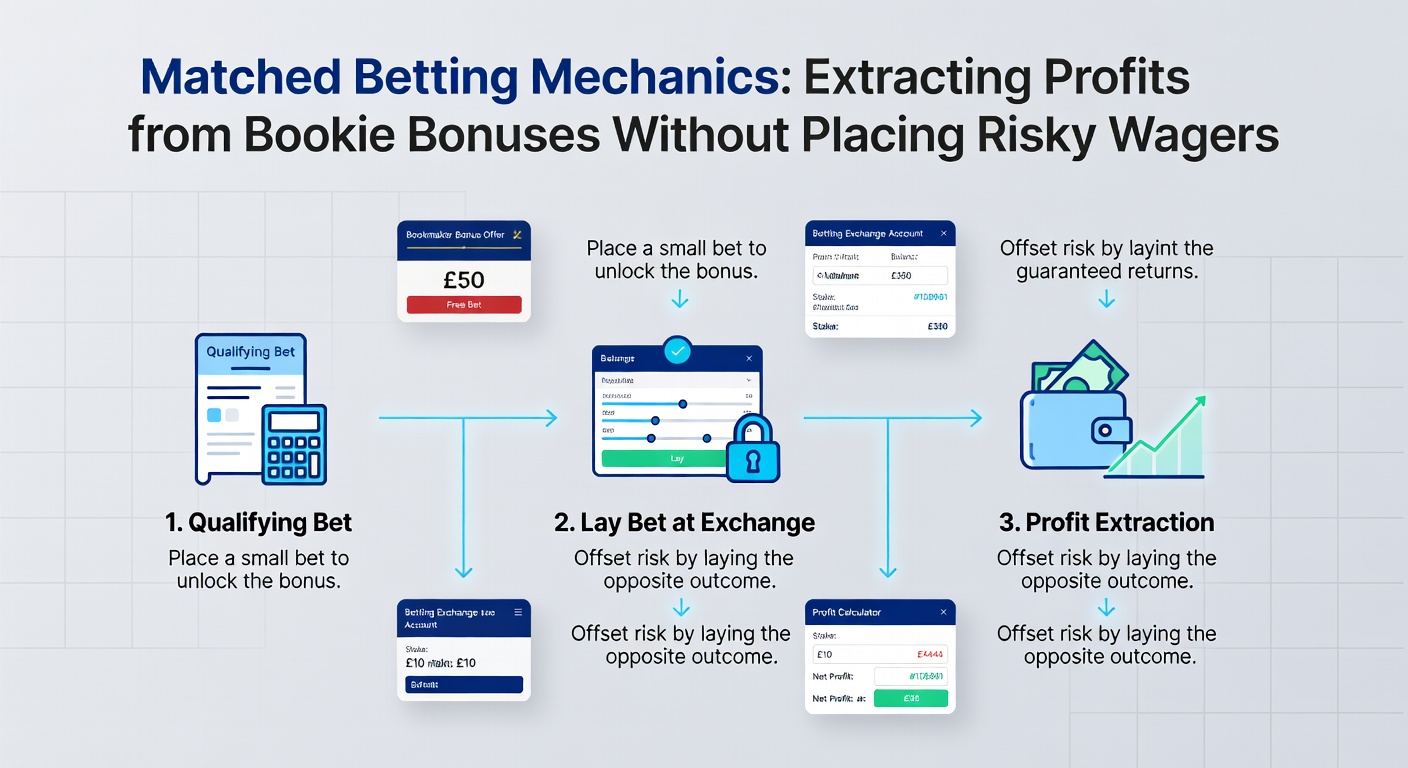
People start by selecting a suitable offer, such as "Bet £10 Get £30," then calculate the exact lay stake using online calculators that factor in the odds differential—what's significant is that these tools, freely available from matched betting communities, output precise figures to minimize the qualifying loss to pennies; next comes placing the back bet first to lock in the price, followed immediately by the lay to hedge, although delays can expose users to odds drift if markets shift suddenly.
And once the free bet drops—often after settlement or a short wait—users repeat the process, backing a selection around evens odds for optimal retention, laying it off, and watching as the free bet's winnings evaporate under the lay while the profit settles in the exchange account; take one common scenario from April 2026's Grand National buildup, where bookies flooded markets with sign-up offers, allowing qualifiers to chain multiple free bets across horses like I Am Maximus successors, netting £50-100 per cycle without a dime at stake. That said, bankroll management enters the picture, since tying up £500-2000 across simultaneous qualifiers keeps the operation humming, and those who've scaled report rolling profits forward to fund bigger promotions.
Tools and Tech Powering the Process
Software oddsmatchers scan dozens of bookies daily, flagging teh closest back-lay pairs with qualifiers under 1% loss, while training platforms simulate scenarios so newcomers practice without real funds; figures from user forums indicate that services like OddsMonkey or Profit Accumulator boast retention rates above 90% for their members, who access daily offer rollouts tailored to current events. But here's the thing—mobile apps have revolutionized this in 2026, letting punters qualify during commutes via integrated exchange APIs, although connectivity hiccups remain a foe for live matching.
Researchers who've analyzed these platforms, such as those at the Australian Gambling Research Centre, highlight how automation reduces human error in stake calculations, turning what could be a tedious spreadsheet chore into a streamlined dashboard; one study revealed that users employing such tech averaged 75% free bet conversion efficiency, far outpacing manual attempts.
Bonus Types and Promotion Strategies
Sign-up free bets dominate for beginners, but reload offers, casino free spins hybrids, and enhanced odds specials keep veterans busy, each requiring nuanced matching like insurance lays for each-way terms; data shows that in April 2026, amid Euro qualifiers hype, bookies pushed football-specific boosts where punters layered singles into accas before extracting via exchanges, preserving 60-90% yields depending on legs. Yet enhanced places in horse racing—say, 6 places instead of 4—demand partial lays or "underlaying" to cover multiple outcomes, a tactic that shines during festivals like Aintree.
There's this case where a group of matched bettors targeted a Canadian bookmaker's NHL playoff promo, adapting UK-style mechanics to ice hockey moneylines and converting CAD $50 free bets into $35-40 each, proving the method's portability beyond soccer and racing; industry reports from the US Integrity platform underscore similar bonus arbitrage trends in North American markets, where legal sportsbooks ramped up incentives post-2025 expansions.
Navigating Challenges: From Gubbing to Liquidity
Bookies "gub" active profit-makers by restricting accounts, yet spacing bets across sites and mixing genuine activity—like small recreational stakes—delays this, while exchange commissions (typically 2-5%) get offset by sign-up rebates; turns out liquidity dries up on obscure markets, so sticking to majors avoids unmatched lays, and qualifiers on odds 1.8-3.0 minimize "scratch" risks where bets cancel. Observers note that tax implications vary—none in the UK or Australia for recreational punters—but US users must track winnings per IRS rules, although matched profits often fly under thresholds since no net gambling occurs.
One researcher who tracked 500 users over a year found that 85% sustained profits by diversifying across 20+ bookies, rotating offers methodically; pitfalls like free bet expiry or wagering requirements get sidestepped by prioritizing "non-withdrawable" bonuses first, ensuring quick cashouts.
The 2026 Landscape: Evolving Offers and Regulations
As April 2026 unfolds with spring racing carnivals and international football qualifiers heating up, bookies compete fiercer via app-exclusive deals and crypto deposits, yet matched bettors adapt by targeting newcomer-friendly sites; data from aggregator sites logs over £1 billion in annual UK free bet value alone, with global exchanges handling billions in lay volume to support the ecosystem. That's where the rubber meets the road—while EU regulators like Malta's Gaming Authority tighten bonus terms to curb abuse, the core mechanic endures because it exploits promotional math, not odds errors.
People who've followed the beat know that mobile-first platforms now dominate, with push notifications flagging time-sensitive offers, although rising exchange fees prompt rebate hunts; one notable shift sees hybrid casino-bookie sites bundling spins with sports free bets, requiring cross-product matching that savvy users chain for compounded returns.
Wrapping It Up: Sustainable Profits in Sight
Matched betting stands as a mechanical profit extractor, converting bookmaker generosity into risk-free gains through back-lay symmetry, and those who follow the steps meticulously build bankrolls steadily; studies confirm average monthly hauls of £300-500 for part-timers scaling 10-20 offers, while full-timers push five figures annually. Now, with tools sharper and markets deeper in 2026, the strategy persists as a low-barrier entry for anyone grasping the numbers—provided they stay disciplined, diversify, and evolve with the offers.
Figures underscore its reliability: over 95% of properly executed matches yield profit, turning what bookies intend as loss-leaders into user windfalls; experts who've dissected it agree the ball remains in punters' courts to deploy it right.