Cross-Market Probability Mapping: Aligning Live Event Data with Sign-Up Incentives for Multi-Sport Wagers on Digital Platforms
Written by Dana Schmitt · Aug 5, 2026
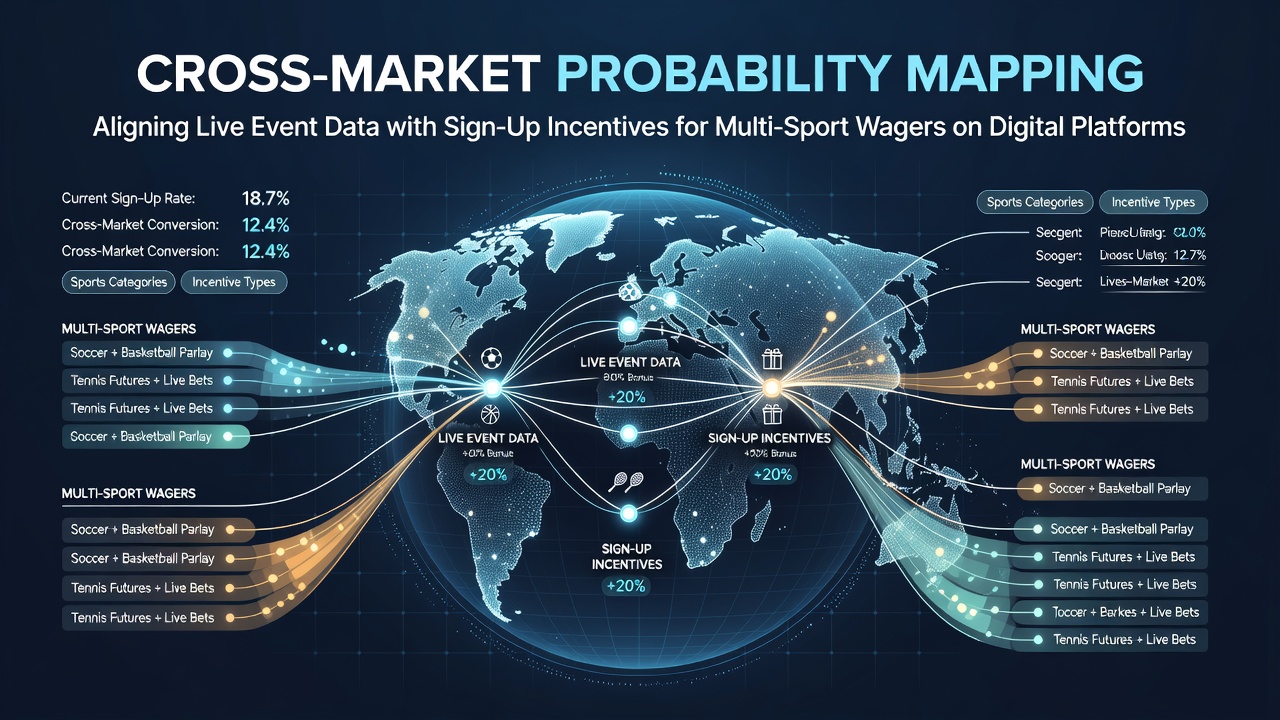
Cross-Market Probability Mapping: Aligning Live Event Data with Sign-Up Incentives for Multi-Sport Wagers on Digital Platforms
Cross-market probability mapping combines real-time event statistics from multiple sports with structured sign-up incentives to guide multi-sport wager construction on digital platforms, and operators apply these methods through layered data models that calculate outcome likelihoods across football matches, tennis sets, and basketball quarters simultaneously. Research from academic institutions shows that such mapping relies on synchronized feeds where live metrics like possession percentages and serve success rates feed into algorithms that adjust implied probabilities for combined bets.
Data Integration Foundations
Platforms pull structured data streams from official league sources and third-party analytics providers, then merge those inputs with user eligibility flags for welcome bonuses and deposit matches; this process allows conditional probability calculations to shift when a sign-up incentive applies to a parlay spanning two or more sports. Observers note that August 2026 schedules introduce overlapping fixtures across European football leagues and North American baseball seasons, which increases the number of cross-market opportunities available within single sessions.
Aligning Incentives with Live Metrics
Sign-up offers often carry wagering requirements tied to specific sports or bet types, and mapping systems track these constraints against live probability curves so that users receive prompts when an incentive aligns with a high-value combination. Studies conducted by the Canadian Centre on Substance Use and Addiction indicate that structured alignment between bonus terms and real-time data reduces instances of mismatched bet placement while maintaining platform compliance standards.
Engineers build decision trees that factor in variables such as current score differentials, time remaining, and historical head-to-head records; these trees generate adjusted odds that incorporate the value of any active sign-up credit. When a user qualifies for a multi-sport free bet, the system recalculates the expected return across candidate markets and surfaces only those combinations that satisfy both the incentive rules and the mapped probability thresholds.
Platform Implementation Patterns
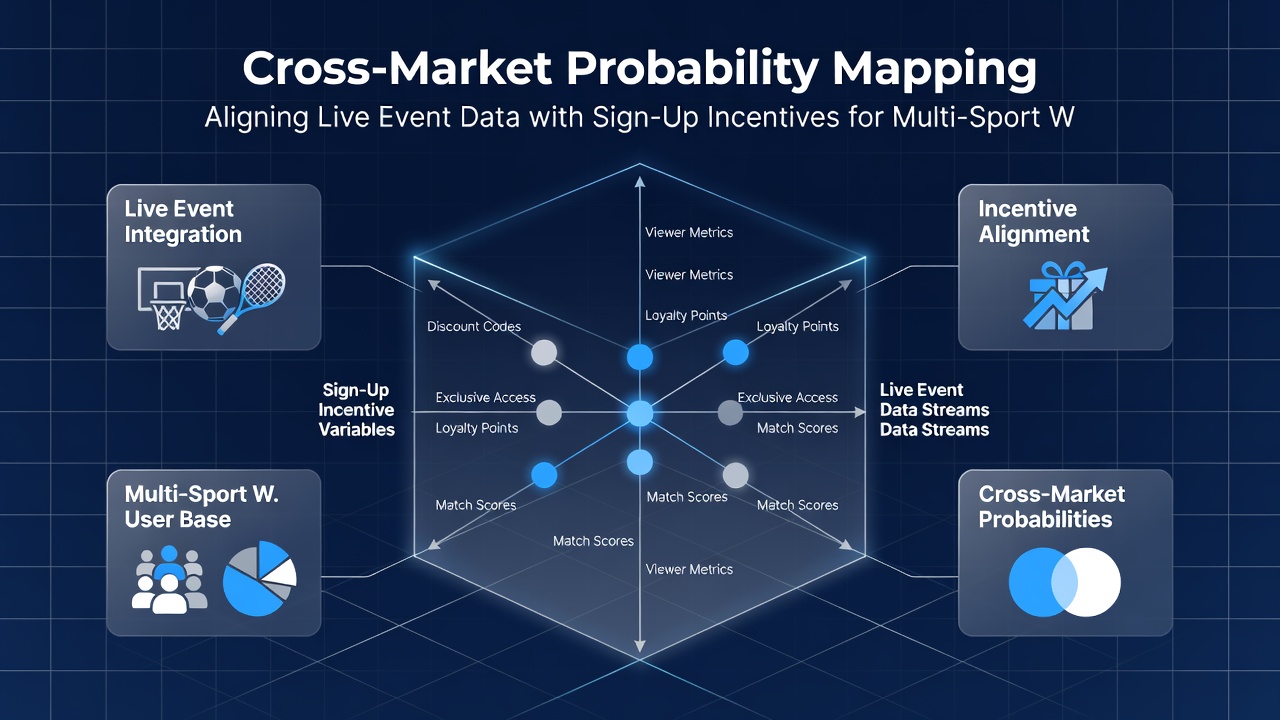
Digital operators deploy these systems through modular APIs that connect live data vendors to bonus management engines, and the resulting interfaces display probability heat maps that update every few seconds during active events. Users who have claimed sign-up packages see conditional multipliers applied only when the selected legs meet predefined cross-market criteria, which keeps the incentive structure intact while reflecting live developments.
One documented approach involves weighting recent performance indicators more heavily than season-long averages when a bonus expires within a set window, thereby aligning short-term probability shifts with the remaining incentive period. This method appears in platforms operating across multiple regulatory jurisdictions where bonus terms must remain consistent regardless of concurrent sporting calendars.
Regulatory and Technical Considerations
Authorities in several regions require transparent disclosure of how live data influences bonus eligibility, and platforms respond by publishing methodology summaries that detail the probability models without exposing proprietary algorithms. Reports from the Australian Institute of Criminology highlight the importance of audit trails that record each mapping update so regulators can verify that incentive adjustments correspond to verifiable event data rather than static assumptions.
Technical teams maintain fallback protocols that revert mapped probabilities to baseline figures if data latency exceeds defined thresholds, which prevents distorted recommendations during brief outages. These safeguards become especially relevant during August 2026 when simultaneous international tournaments generate elevated traffic volumes across betting applications.
Conclusion
Cross-market probability mapping continues to evolve as platforms refine the linkage between live event inputs and sign-up incentive frameworks, and the resulting systems provide structured pathways for constructing multi-sport wagers that respect both statistical likelihoods and promotional parameters. Data from regulatory bodies and research organizations shows measurable adoption of these techniques across digital environments, with ongoing development focused on latency reduction and cross-jurisdictional consistency.